"I think I'm screwing up my kids"
The nervous system solution for parents who keep getting triggered — and know their kids are paying the price.
You See It Happening...
Right now. In real time.
Your child is struggling in ways that worry you.
They're more anxious than other kids their age. They have meltdowns over small things—transitions are hard, new situations overwhelm them.
They're either rigid (everything has to be just so) or they're completely falling apart.
They can't adapt. Can't be flexible.
And they're not laughing and playing like they used to.
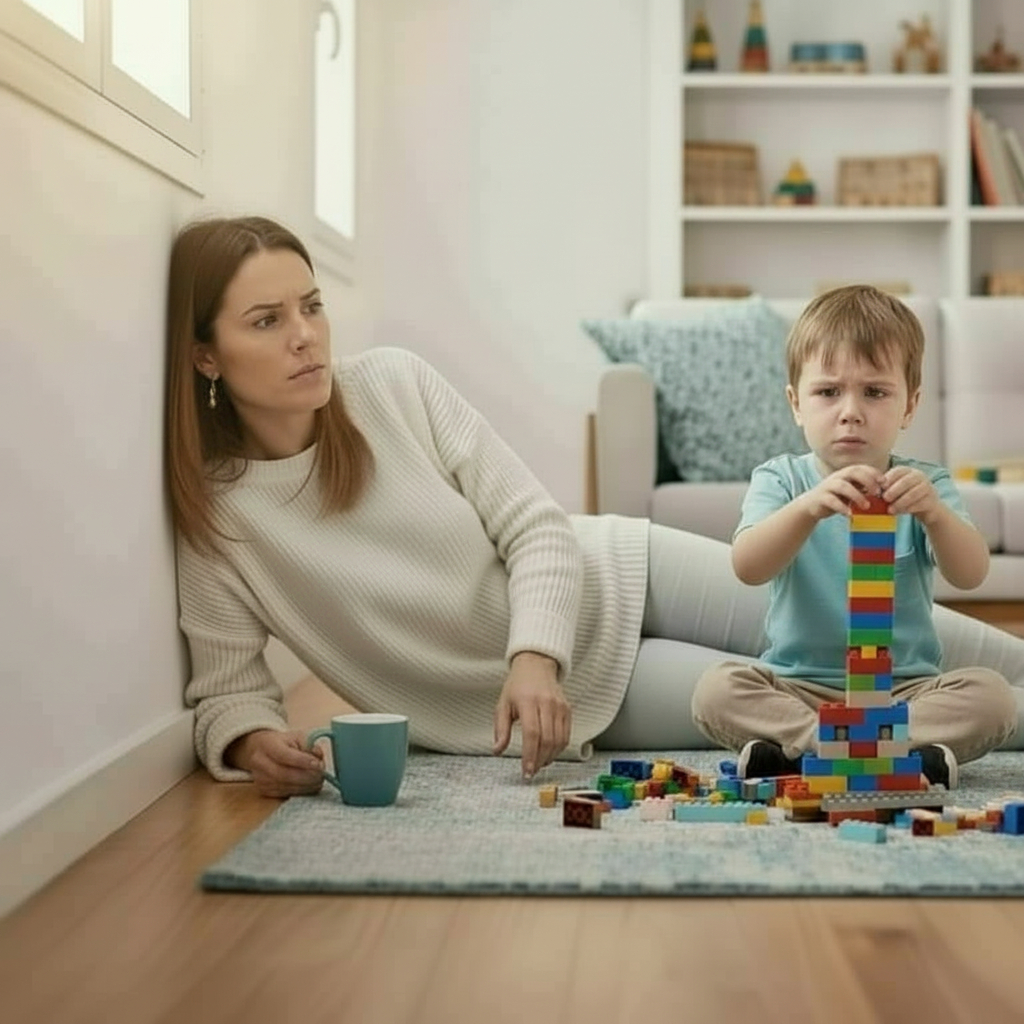
You watch them with other kids and you see it: they're different. More tense. More reactive. Less resilient.
And a question starts forming in your mind.
"Am I doing something wrong?"
"Is this... my fault?"
You Reflect . . . Aren't I doing Everything "Right"?
You mentally run through the list.
The activities. The lessons. The opportunities. The schedule that keeps it all running smoothly.
You're giving them every advantage you never had. The attention your parents never gave you. The support you desperately needed as a child but didn't get. You're there for them in ways your parents never were.
And let's be honest: society isn't making this easy.
No real parental leave to bond with your baby. Two incomes required just to keep the bills paid. Communities designed for cars, not for kids to roam and explore safely. Workplace cultures that make it nearly impossible to stay home with a sick child without guilt or consequences. Schools adjusting standards downward because kids are showing up less and less ready to learn. A culture that screams "good parents" chauffeur their kids to every activity, show up to every game, manage every detail of their lives.
You're exhausted because the system is exhausting.
You're working harder than your parents ever did to give your kids a better childhood than you had.
But it's not working out the way you hoped.
Something's still wrong.
The 3 AM Worries That Won't Let You Sleep

You lie there replaying the moments.
Your toddler reaching for your partner instead of you—again.
Your 6-year-old flinching when you raise your voice.
Your teenager shutting down the moment you try to help—even when you're genuinely trying to be encouraging.
You swore you'd be different than your parents.
You promised yourself you'd break the cycle.
But here you are—losing control in the moment, suddenly yelling, words tumbling out that you don't mean. Repeating things that sound exactly like what your parents said.
Getting triggered by normal kid stuff—the whining, the messiness, even just the way they look at you sometimes.
Lying awake each night replaying it all, the guilt eating at you, wondering how you can stop this.
"I think I'm screwing up my kids."
The thought won't leave you alone.
But Here's What You Need to Know: It's Not Your Fault
Your nervous system is the product of thousands of years of evolution—and generations of your family's unhealed trauma.
Think about the last time you got triggered.
Your child does something—asks for something, forgets something, pushes back on something.
And suddenly you feel it in your body. That surge of heat rushing through you. The tightness gripping your chest. Your heart pounding. The shakiness in your hands. That overwhelming urge to yell. Or escape. Or shut down completely.
You're losing control and you know it—but you can't stop it.
The words are coming out before you can think. Your voice is rising. Or maybe you're doing the opposite—shutting down, disconnecting, going numb.
You sound exactly like your parents.
Even though you swore you'd be different.
Here's What's Really Happening When You Get Triggered
Once you're triggered, alarm bells pulse throughout your body.
You experience a HUGE spike of tension flooding through you.
Your reptilian nervous system hijacks your thinking brain.
In that moment, you literally lose access to your prefrontal cortex—the part of your brain that makes rational decisions, considers consequences, chooses your response.
Your automatic survival responses take over.
Depending on your nervous system's resilience, you do one of three things:
FIGHT: You suddenly snap at your child. Your voice harsh. Your words cutting.
FLIGHT: You rush both of you frenetically onto the next thing. Hurry up, hurry up, let's GO. The energy frantic and pushing.
FREEZE: You shut down and disconnect. Go numb. Your body present but you're not really there.
None of these are choices you're making.
They're automatic reactions your nervous system learned long ago.
And Then the Fallout Hits
You're left standing there. Shaken. Guilty. Watching the distance grow between you and the child you love.
The fallout lasts for days—in you and in your child. You might find yourself easily moved to tears, or unusually exhausted. Your child becomes clingy—or they pull away. The rupture sits between you, unspoken.
You try to move on. Tell yourself: "Kids are resilient. They'll forget about it. It's fine."
But here's what most people don't understand: that charge you felt—that activation flooding your body—wasn't just about this moment with your child.
Being "triggered" is your body's signal that an old wound has been activated. Not a wound from this relationship with your child. A wound from your childhood. Stored in your nervous system. Encoded in your body. Waiting.
And when something in the present even slightly resembles something from your past, your nervous system reacts as if you're back there. Back in that moment when you were small. Powerless. Hurt. Alone.
Your nervous system literally cannot tell the difference between then and now.
Let Me Show You How This Plays Out
Meet Jane.
Jane's 8-year-old son bounces into the kitchen one Saturday morning.
"Mom, can I sleep over at Dylan's house tonight?"
Before Jane even has a conscious thought, the words come out sharp and hard:
"No. Absolutely not."
Her son's face falls. He collapses into his phone.
Jane's husband looks up, surprised. He catches her eye. She feels his look and immediately gets defensive: "Well, he should know better than to ask that!"
Her husband speaks quietly: "Honey... he was just asking a question. He might not know if this is a big deal or not. He's eight. He was just asking."
Jane feels heat rising in her face. Shame now mixing with the anger.

Did you hear it in her voice? "No. Absolutely not."
She's not just saying no. She's ticked off that the question was even asked.
If you peel back the layers and look at Jane's childhood, you find this: strict parents. Very strict. She was sheltered. Controlled. She wasn't given chances to be out in the world, to experience things, to learn that maybe—just maybe—the world isn't always as dangerous as her parents believed.
She never got to develop her own sense of what's safe and what's not. She only internalized her parents' fear.
And now, decades later, when her 8-year-old asks a simple question about a sleepover, Jane's nervous system activates that old wound: "The world is dangerous. Control is the only way to keep people safe."
The intensity in her voice—the sharpness, the anger—isn't about the sleepover. It's about an 8-year-old girl who never got to explore her world.
Jane's son didn't do anything wrong. Jane isn't a bad parent.
But Jane's unhealed wound just got passed on to her son through that interaction.
He learned in that moment: Asking for things brings anger. My needs upset Mom. The world must be really dangerous if even asking about a sleepover makes her react like that.
This is how wounds get passed down. Not through intentional harm. Through nervous system activation we can't control—because we never healed the original wound.
This Is the Pattern With ALL Triggers
Something in the present—your child's behavior—activates something from the past: your childhood wound.
You feel it as a charge in your body before you even have a conscious thought.
Your nervous system can't tell the difference between then (your childhood) and now (your parenting). So it floods your body with the same response you had as a child. And in that moment, you lose control.
You're not making a parenting decision. You're reacting from an old wound stored in your nervous system.
Your child feels this activation in your body. And they absorb it.
Not your words. Not your intentions.
Your activated nervous system state.
Your Child's Nervous System Is Learning From Yours
Here's the science most parents don't know.
Your children's nervous systems are shaped by your nervous system state—through a process called co-regulation.
From infancy through adolescence, your child's nervous system is constantly syncing with yours, learning how to regulate emotions, handle stress, respond to challenges, and simply be in the world.
If your nervous system is constantly activated, carrying unhealed wounds, or operating from fear and control—that's what your child's nervous system learns as its baseline.
Your child's nervous system capacity cannot exceed yours.
And what that nervous system learns from yours will determine how they show up in the world they're inheriting .
The World They're Growing Into Requires Something Different
Here's something worth sitting with.
The world your children are growing up into is unlike any that's come before. Careers will shift. Industries will transform. The job your child trains for today may look completely different—or not exist at all—by the time they're 30. The pace of change is accelerating, and no amount of scheduling, tutoring, or curating their childhood can fully prepare them for what's coming.
What this world requires isn't more credentials or more opportunities managed by you.
It requires a nervous system that can adapt.
The capacity to stay regulated under uncertainty. To pivot when plans fall apart. To tolerate not-knowing. To recover when things don't go as planned. To take risks, try again, and find genuine joy along the way.
These aren't personality traits. They're nervous system capacities. And they develop through co-regulation—learned, in those early years especially, from you.
There's something else worth saying here, and it's a little harder to hear.
Your job—the deepest version of it—is to grow a human who can eventually regulate without you. Who can face an uncertain world and meet it with flexibility, resilience, and joy. Who has an inner life robust enough to carry them through whatever comes.
That begins with your nervous system.
When you heal, they inherit the capacity to thrive in a world you can't fully prepare them for. And they get to do it with a parent who can laugh with them along the way.
Why You Can't Play—And Why That Matters
You've noticed it, haven't you?
You can't get down on the floor and just be with your kids. You can't be silly, spontaneous, fully present. You can't laugh together like you used to.
Remember when they were babies? That back-and-forth play? The tickling, the laughter building between you?
That kind of joyful play actually expands the nervous system. Laughter—especially deep belly laughs—builds nervous system capacity and resilience. It's one of the most powerful tools for nervous system health.
But when your nervous system is tight with unhealed wounds, you can't access that kind of play. Play and joy require safety in your body. Capacity to be present. Freedom from the "never enough" drive. When your nervous system is dysregulated, play and laughter aren't accessible.
And if you can't access play and joy, you can't pass that resilience on to your children.
Your kids need more than just "no yelling." They need a parent whose nervous system can expand through play and laughter—because that's how their nervous systems learn to be resilient.
This is why the program is called Play-Full Parenting. Because when you heal your nervous system, you can finally be with your kids. Present. Spontaneous. Laughing together. Alive.
The Insight That Changes Everything
Your triggers aren't problems to manage. They're the fastest path to your wounds.
Every time you get triggered and feel that charge in your body, your nervous system is saying: "There's an old wound here that needs healing."
When you heal that wound through body-based work, the trigger loses its power. And your child stops absorbing your dysregulated state. They start absorbing your healing—your increased capacity, your ability to play and laugh.
This is why:
Parenting books don't work. They teach techniques, not healing. When the wound is active, no technique survives contact with it.
"Staying calm" strategies don't work. You're suppressing, not healing. The wound is still there.
More information doesn't work. Your trigger isn't in your thinking brain. It's in your nervous system, in your body.
You need to heal the source—the wounds stored in your nervous system.
When you heal, your nervous system capacity increases. And your children absorb that through co-regulation.
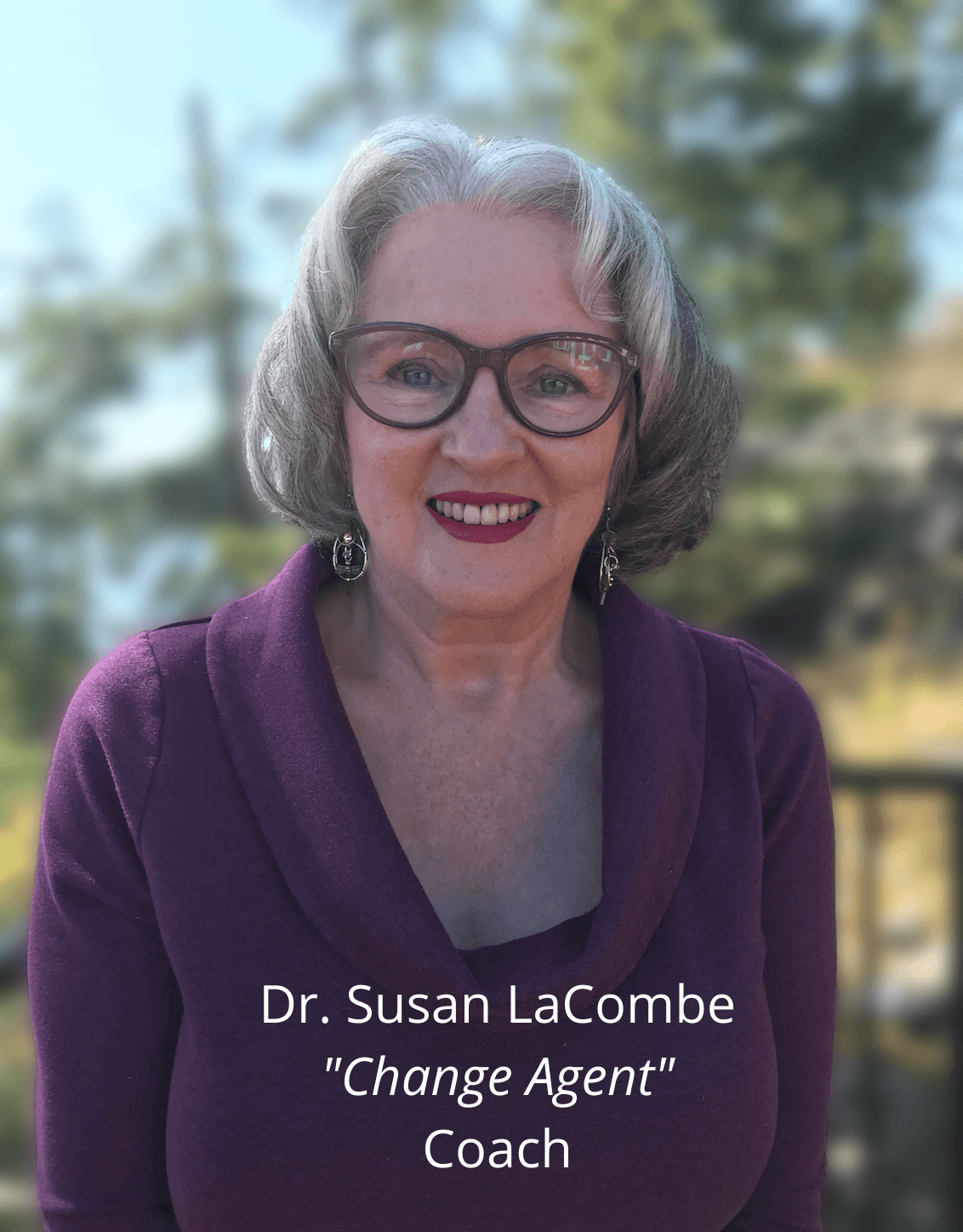
Meet Dr. Susan LaCombe

Dr. SUSAN LACOMBE 30-Year Veteran, Licensed Psychologist, Somatic Specialist and Rebel Shrink
I'm not a parenting expert. I don't work with children.
What I do know—from over 30 years of clinical practice—is how childhood wounds shape adult nervous systems. And how those wounds get passed on to the next generation through co-regulation.
When adults come to me struggling with anxiety, triggers, and relationship issues, we trace it back. Every time, we find unhealed wounds from childhood—stored in their nervous systems as patterns of activation.
Now many of those adults are parents themselves. And they're terrified: "I'm doing to my kids what was done to me."
Through reverse-engineering hundreds of adult wounds back to their childhood origins, I've learned what goes wrong—and how to heal it by working directly with the nervous system through the body.
Play-Full Parenting with DeCoding the Brain isn't about parenting strategies. It's about healing your childhood wounds—so you stop unconsciously passing them on to your children.
Because here's what I know for certain after three decades of this work:
You can't see your child clearly if you weren't seen yourself. You can't raise resilient kids while your nervous system operates from fear. You can't pass on play and laughter if you can't access them yourself.
When you transform your nervous system, your children inherit healing instead of wounding.
How Play-Full Parenting Works: The Two-Phase Framework
Phase 1: Build Your Nervous System Foundation
Learn the body-based tools for regulating your nervous system.
In this phase, you'll learn to recognize activation in your body before you lose control—and use body-based exercises to discharge the charge before it becomes a reaction. You'll build your nervous system capacity so you can handle more without triggering, and understand the science of what's actually happening when you get activated.
The core tools in Phase 1:
The Feel Good Guide (FGG): When you're activated and losing control, get the exact body-based exercise you need—sorted by intensity level. Downloadable audios you can use anywhere, anytime.
The Online Workbook: Step-by-step cheat sheets for working with a trigger in the moment. Track your triggers, watch your patterns emerge, and follow your progress. (Deepened further in the Working with Triggers module.)
The Tracker Tool: A quick weekly check-in that records your physiological state over time. Even using it once is an eye-opener—you'll see how many "different" problems are actually variations of one thing. Working on your nervous system solves more than you think.
Daily Challenges: Friendly prompts to use your tools consistently—because it's the doing, not just the understanding, that changes the brain. Complete Challenges, earn points, and unlock Bonus courses on topics like Beyond Abandonment Issues, What It Means to Be Triggered, and Freedom After Trauma.
Phase 2: Heal Your Wounds Through Your Triggers
Use your triggers as the fast path to healing childhood wounds.
This is where the deep transformation happens.
Your triggers are the doorway to your wounds. Every time you get triggered, that charge you feel in your body is pointing directly to an old childhood wound that needs healing.
In this phase, you'll learn to work with your triggers instead of dreading them. Using the body-based skills from Phase 1, you'll access childhood wounds when they're active—the exact moment you can heal them. You'll create new experiences your nervous system accepts as real (called "do-overs"), transforming automatic reactions into the responses you actually want to give.
This is inner child work—but done through your triggers, using body-based exercises.
Why triggers are the fast path: When you're triggered, the wound is active in your body. You can feel it. That's exactly when you can reach it and heal it.
BONUS: The Play-Full Repair Toolkit
Here's something most parents already know: there are moments you regret. Words said in a triggered state. Reactions you wish you could take back.
What most parents don't know is this: when you repair what went wrong, you don't just fix the damage. You actually deepen the connection. Research on "good enough" parenting shows that it's not the rupture that harms children—it's the rupture that never gets repaired. When children experience a real repair, they learn that relationships can be trusted, that love holds even after conflict, and that they are worth coming back for.
The Play-Full Repair Toolkit gives you the tools to do exactly that—play-based reenactments for young children (ages 2–8) and authentic repair conversations for older children and teens (ages 9+), with scripts and guidance for common ruptures. And because repair uses the same body-based principles as your own healing, doing it reinforces your transformation at the same time.
The Repair Toolkit is unlocked as you progress through the program.
The full program includes: 6 courses · The Feel Good Generator · The Online Workbook (with cheat sheets, trigger tracking, and progress tools) · The Tracker Tool · Daily Challenges with gamified Bonus courses · The Play-Full Repair Toolkit · 24/7 access
What Changes When You Do This Work
For you:
Before: constantly triggered, losing control, saying things you don't mean, repeating your parents' patterns, lying awake at 3am terrified you're screwing them up—and unable to simply play with your kids.
After: triggers lose their power. You can pause before reacting. You can get on the floor and play—laugh together, be silly, be genuinely present. You're breaking the patterns instead of repeating them. The 3am guilt is gone. You feel alive again.
For your children:
When you heal your nervous system, they absorb the benefits through co-regulation: increased capacity to handle stress and transitions, more resilience, less anxiety, better self-regulation, the ability to take risks and try new things—and yes, laughing and playing again.
They also learn something profound: that ruptures can heal. That relationships can repair. That the world is navigable.
These changes happen not through your words or intentions—but through the transformed nervous system state they absorb from you.

What Members Are Saying
Play-Full Parenting is built on the DeCoding the Brain platform — the same nervous system work that's transformed hundreds of lives, now expanded specifically for parents. These members worked with the core program; the parenting content is new, developed directly from clinical work with parents over many years.

Bea... | better therapy member (unsolicited feedback)
GAME CHANGER!
Hi Susan,
Thank you so much for the Program! Becoming aware of my activation has been a GAME CHANGER! I've done so many courses and workshops over the years but this was by far the MOST EFFECTIVE course I have ever done!
I'm so grateful for everything you taught me!!
Best regards,
Bea
doris s. ... | member/unsolicited feedback
TURNED MY LIFE AROUND
"I have a most wonderful life and I love it!" This is the shortest way of me expressing how timely, fitting, tailor made, completely appropriate and helpful your program was and is, and (I am sure of it) will be. It has helped me turn my life around, make lasting changes to the quality of my life, and you have most certainly kept your initial promise!"
Doris
Gay.l. ... | Founding member
NOW I HAVE TOOLS TO DEAL WITH MY FEELINGS
"The BCP [now Play-Full Parenting] is helping me understand my core self in a way never before explored and is giving me tools to move through feelings & experiences I have always thought were in control of me, triggering panic and fear that would last for days... brain based and scientific."
Gay L.
YOUR INVESTMENT
Prevent your past from becoming your child's future.
Play-Full Parenting isn't about becoming a perfect parent. It's about becoming a REGULATED, PLAY-FULL parent who can:
✓ Feel triggered without being hijacked by it
✓ Finally feel like yourself again—not just a parent, but a person
✓ Get off the hamster wheel of guilt, react, repair, repeat
✓ Access spontaneity and joy with your kids
The greatest gift you can give your children is a parent who's done their own work.
PLAY-FULL PARENTING
with
DeCoding the Brain
$79
Tina f. ... | member (unsolicited)
SO HELPFUL!
I hope you don't mind me emailing you like this. I just wanted to say I purchased your program and it's been extremely helpful. I'm up to the part about releasing anger and it's something I've needed help with for a while. Thank you for these amazing techniques and information, it has all been so helpful!
Best,
Tina F.
FREQUENTLY ASKED QUESTIONS
Most parenting programs teach you techniques: How to discipline without yelling, how to set boundaries, how to communicate better.
Play-Full Parenting addresses the SOURCE: YOUR childhood wounds that get activated when you parent.
When you heal the wound, the trigger loses its power. Then you don't NEED techniques because you're not getting triggered in the first place.
This is nervous system transformation work, not behavior management.
"Somatic" just means "of the body."
Somatic practices work directly with your nervous system through body-based experiences—not through thinking or talking ABOUT your problems.
For example:
- Instead of "thinking about" why you get triggered, you FEEL where the trigger lives in your body
- Instead of "understanding" your childhood wound, you ACCESS the felt experience of that wound in your nervous system
- Instead of "managing" your reactions through willpower, you HEAL the wound so the reaction doesn't happen
The practices are simple to follow. I guide you step-by-step with video demonstrations.
You don't need to understand the theory to benefit—your nervous system knows what to do when given the right conditions.
The practices are designed for exhausted parents. You use what you need, when you need it—this isn't a course you have to "complete."
The somatic tools: 2-10 minutes when you're triggered or doing daily practice.
The training content: Delivered in bite-sized pieces over 4 levels. Go at your own pace.
The inner child healing work: Some sessions might be 15-20 minutes when you're doing deeper wound work.
But here's what's important: This isn't about adding more to your overwhelmed schedule.
It's about USING these tools in the moments you're already struggling:
- When you're triggered and about to lose it
- When you're lying awake at 3am consumed by guilt
- After a rupture when you need a repair tool
- When you catch yourself repeating your parents' patterns
It's less "doing a program" and more "having tools available 24/7 when you need them."
Many parents report feeling LESS exhausted after the first week because they're not constantly triggered and fighting their nervous system. The exhaustion isn't from doing too much—it's from being dysregulated. When your nervous system heals, energy returns naturally.
Many parents report feeling LESS exhausted after the first week because they're not constantly triggered and fighting their nervous system. The exhaustion isn't from doing too much—it's from being dysregulated. When your nervous system heals, energy returns naturally.
Traditional talk therapy works with your thinking brain. These triggers live in your nervous system—below conscious thought. Somatic techniques access and rewire the automatic reactions that talk therapy can't reach.
Yes, but not by suppressing your reactions or "managing" them better.
When you heal the childhood WOUNDS that are driving your triggers (using the somatic practices and "do-over" process), the triggers naturally diminish or disappear.
Some triggers might lose their power after a few weeks. Others (tied to deeper wounds) might take months of consistent work.
But parents consistently report: "Things that used to send me into a rage barely register now" or "I can feel activation starting but it doesn't take me over—I have control back."
This isn't about suppression. It's about healing the source so the reactions don't happen in the first place.
That's exactly why you need this.
Most triggered parents have lost access to their own spontaneity and playfulness—it got shut down in THEIR childhood when they learned that being "good" or "productive" was safer than being free.
The somatic work doesn't teach you "how to play" intellectually. It heals the wounds that are BLOCKING your natural playfulness and spontaneity.
When those wounds heal and your nervous system capacity increases, play emerges naturally. You don't have to force it or fake it.
You'll surprise yourself. Your kids will be delighted.
This is what keeps you up at 3 am. The fear that the damage is permanent.
Here's the truth: Your triggers HAVE been affecting them through co-regulation. They've been absorbing your dysregulated nervous system state.
But children's nervous systems are remarkably plastic.
When you heal YOUR nervous system and increase YOUR capacity, they absorb that healing through co-regulation.
The same way they absorbed your dysregulation, they can absorb your healing and transformation.
Plus, the Play-Full Repair Toolkit gives you specific tools for healing ruptures you've already created—through play-based reenactments for young children and authentic repair conversations for older children and teens.
Research shows that repair is MORE powerful than never making mistakes. When your kids see you doing your own work and repairing ruptures with them, they learn: People can change. Mistakes can be healed. Relationships can be restored.
It's not too late. But you do have to do the work.
Yes, and this is one of the most powerful parts of Play-Full Parenting.
The Play-Full Repair Toolkit teaches you:
For young children (ages 2-8): How to use play-based reenactments where your child directs the scenario. You follow their lead. They get to be the "hero." Their nervous system processes this as a corrective experience that heals the old rupture.
For older children and teens (ages 9+): How to have authentic repair conversations where you acknowledge specific hurts, hold space for their pain without making it about your guilt, and rebuild trust through genuine presence (not just words).
The key: You must do YOUR wound work first.
If you try to repair while still carrying your own unprocessed wounds and guilt, your child will feel the inauthenticity in your nervous system. They won't trust it.
But when you've done the somatic healing work and your nervous system is genuinely transformed, repair becomes possible—and profoundly effective.
Children feel the difference between a performed apology and authentic repair at the nervous system level.
This work is deeply grounded in neuroscience, attachment theory, and trauma research:
- Polyvagal theory (Dr. Stephen Porges)
- Interpersonal neurobiology (Dr. Dan Siegel)
- Attachment research (Bowlby, Ainsworth, and modern researchers)
- Somatic psychology and trauma work (Dr. Peter Levine, Dr. Bessel van der Kolk)
The somatic approach isn't "woo-woo"—it's the cutting edge of how we understand nervous system transformation and healing.
Traditional talk therapy works with your thinking brain (the neocortex). But triggers and childhood wounds live in your nervous system—in the subcortical regions that don't respond to cognitive understanding alone.
Somatic work accesses those deeper layers where actual transformation happens.
This is why insight alone doesn't change behavior. You need embodied, nervous system-level healing.
My promise to you . . .
GUARANTEED SATISFACTION

You have my 14-day unconditional guarantee of satisfaction.
I built this program over several years—not in theory, but through direct clinical work with real people. My clients and customers told me what they needed. They showed me what worked and what didn't. Every feature, every tool, every interactive element exists because someone in my practice needed it.
This isn't a collection of courses you watch and forget. It's a platform designed to help you actually change—right inside the program, through interactive elements that meet you wherever you are, in whatever state you're in.
I'm confident that if you show up and use the tools, you'll feel the difference.
But if within 14 days you feel it's not working for you—for any reason—just click Cancel and you'll receive a full refund. No hoops to jump through. And if life gets busy and you need to step away temporarily, pausing is just as easy—one click, done.
My goal is for you to get results. If that's not happening, I don't want your money.

Still have questions? Click here for a Free 20-Minute Call. We'll talk through whether the program, coaching, or both might be the right fit for you.